
STRATEGIC MESSAGING FOR SCALING BRANDS
The brand that made sense at launch doesn't always make sense at scale

You're making positioning decisions based on assumptions from year one. But your offer has expanded, your audience has shifted, and your instincts aren’t working anymore.
Congratulations! You're dealing with an adolescent brand.

Founders will tell you their business is their baby.
You brought it into existence, went through the painful early years, and came out the other side knowing exactly what it needed.
That instinctiveness is one of the most valuable things about running a business you built yourself.
But there's a stage that comes after that, and it arrives with a grunt, an eye roll, and a slammed door.
You’ve created something extraordinary. You have revenue, a team, customers who keep coming back. But it feels - weird. The campaigns that used to land are being met with indifference, sales calls that used to be a slam dunk are a struggle, and no one’s scrolling past the fold on your home page.
So you throw more money at ads, A/B test a dozen landing pages, panic-engage a bunch of influencers, brainstorm 17 new offers. None of which works, because you’re looking for the problem in the wrong place.
The Adolescent Brand
The symptoms look different in every business. But there’s a pattern, once you know what you're looking for.
Everything ends up back on your desk. Your team are capable. But the Brand Guidelines are 2 years out of date. So you’re spending hours a week reviewing content because you can’t accurately describe what the brand actually sounds like.
Your customers don’t love what you think they love. They found you, and they stayed, but the wins for them aren’t the ones plastered all over your campaigns. Your audience has voted, but you’re still pushing the benefits of your MVP.
Your marketing spend is producing traffic, not conversion. You've tested the creative, adjusted the funnel, played with audiences, but the problem is in your positioning - so you’re paying to send people to pages that don’t speak to them.
Your marketing no longer matches the experience. Clients love working with you because you feel like a friendly, competent extension of their team, but the proposals and website sound like every other impersonal agency.
So, what do you do about it?

Not your friend; not your mum

““I needed a critical friend at the very minimum - and someone with Peta’s kind of expertise in an ideal world. Somebody to go through the wardrobe with me and say “keep that one, that suits you, bin that one, it looks bloody awful”.””
When you’re a teen, your parents are there to set boundaries, to raise you to be a functioning and productive member of society.
Your friends care about whether you like them. They’re dealing with the pressure to agree, to go along, to keep things comfortable.
The critical friend sits between the two, without the baggage of either. Someone whose approval you don't need, and who doesn't need yours. Someone who has a wider perspective, and cares about you as a human.
That was my job for fifteen years - in skate parks and church halls and school counselling rooms.
This is what a scaling brand needs.
Your team are too close to see it clearly. And you, by definition, are the one person who can't fully separate what the brand is from what you've put into building it - the baby it used to be.
You need someone to ask the question nobody else is asking, even when it’s the uncomfortable one. Someone who won’t tell you what you want to hear when what you need to hear is something different.
Don’t just take my word for it
“We trusted Peta with our customer interviews and to lead us on a journey to better understand why our customers love our brand. She did a phenomenal job.”
— Andy, Plum Deluxe"Peta truly heard us, not just listened to us. Now, I can focus on growing the business instead of constantly correcting content."
— James, Evolution Engineers"I feel like I know what the brand is now, and the story we're trying to tell - it really helped me visualise it"
— Tyler, Brilly
What working together looks like
Brand Messaging Framework
Starting at $5,000 (+$2,000 with client and customer interviews)
For scaling businesses who’ve outgrown their founding message. This gives you the full picture: positioning, value propositions, audience, key messages, differentiators, brand personality and story. All delivered in a designed framework document with Loom walkthroughs, built for your whole team to use (not to languish in your downloads folder).
This is a six-week project. It starts with onboarding and a custom questionnaire, moves through stakeholder interviews, customer and market research, and framework creation, and ends with a collaboration workshop before the final document is delivered.
Brand Voice Development
Starting at $4,000
For teams where multiple people write for the brand, or founders who’ve lost the thread of their own voice somewhere in the growth. Built from a stakeholder interview, a custom questionnaire, a 90-minute brand voice workshop, customer and market research, and a full review of your existing assets.
The output is a voice guide that can travel across the organisation. (One client recovered ten hours a week in content sign-offs when his team finally had a document they could actually use.)
Website Strategy & Copy
Starting at $4,000 for scaling businesses
For when the site you have belongs to the business you were. Messaging, UX consulting, and copy - with the option to bring in my trusted design and development partners or work with your team.
Email Strategy & CRO
Starting at $2,000/month (following an email profit audit, from $1,500)
For businesses with an existing list and the suspicion that it’s underperforming. Starts with an audit that finds what’s working, what isn’t, and where you’re leaving money on the table. Then ongoing: monthly strategy and analytics for funnels, launches, and newsletters.
You hand over the mental load, I bring the plan to increase your ROI.
Brand Therapy Sessions
$249 per session
A single strategy session for a specific, named problem. For when you know what you’re looking at and aren’t sure what to do about it. (Also a useful way to find out whether working together in a bigger capacity makes sense for both of us.)
Not sure what you need? Book a consultation, and we’ll work it out.

The Work
-
B2B SaaS | Engagement and performance platform
Mahesh's platform had a problem with a specific shape: his customers had decided what it was for, and it wasn't quite what he'd planned. The audience self-selecting into Propelon were using it in ways that pointed toward something more focused - but every time he tried to articulate that, he ended up back at "we can do anything." A position that says everything about capability and nothing about who it's actually for.
The work produced one brand-level UVP that gave the whole story coherence, and four distinct UVPs beneath it - one for each of the roles and industries that would use this innovative platform differently.
-

E-commerce | Home décor and wall art
Julian and Simon had 75,000 Amazon customers and almost no insight into who they were. When they decided to move to DTC, they hit the problem that was always coming: they were, in their own words, "very numbers guys - not at all our target group." The emotional story their brand needed couldn't come from inside the business.
Five weeks of discovery calls, forum and review mining, and influencer interviews later, they had it. They weren't selling frames. They were selling the feeling of the room the frame would go in. That insight ran through everything - the voice, the customer avatars, the messaging guide the whole team could hand to a designer or social media manager knowing they'd all be working from the same place.
-

Digital marketing agency | Lead generation
James's team were capable writers. The problem was that the brand lived entirely in his head, and there was nowhere else for them to look. Every piece of content came back to him for sign-off, because without a documented voice, his judgment was the only available reference point.
A comprehensive Brand Messaging and Tone of Voice Guide changed that. The positioning, the differentiation, the specific data-driven wit that made Evolution Engineers actually sound like Evolution Engineers - all of it captured clearly enough that the team could write to it without him. The brand stopped living in one person's head. Content went out with confidence, and ten hours a week went back to the business.
-
E-commerce | Speciality tea brand
Andy had built an e-commerce brand with the loyalty of a community. But the messaging was still aimed at one version of his audience - the one from the early days - while two other distinct customer groups had grown up around the brand without ever finding themselves in the copy.The challenge was building a message architecture that could hold three different types of customer without flattening what made each of them loyal. Voice of customer research across all three segments surfaced what each group needed to hear - and the thread running through all of them turned out to be the thing his most devoted customers had already named themselves. "We are not customers. We are family.”
The same job, different setting
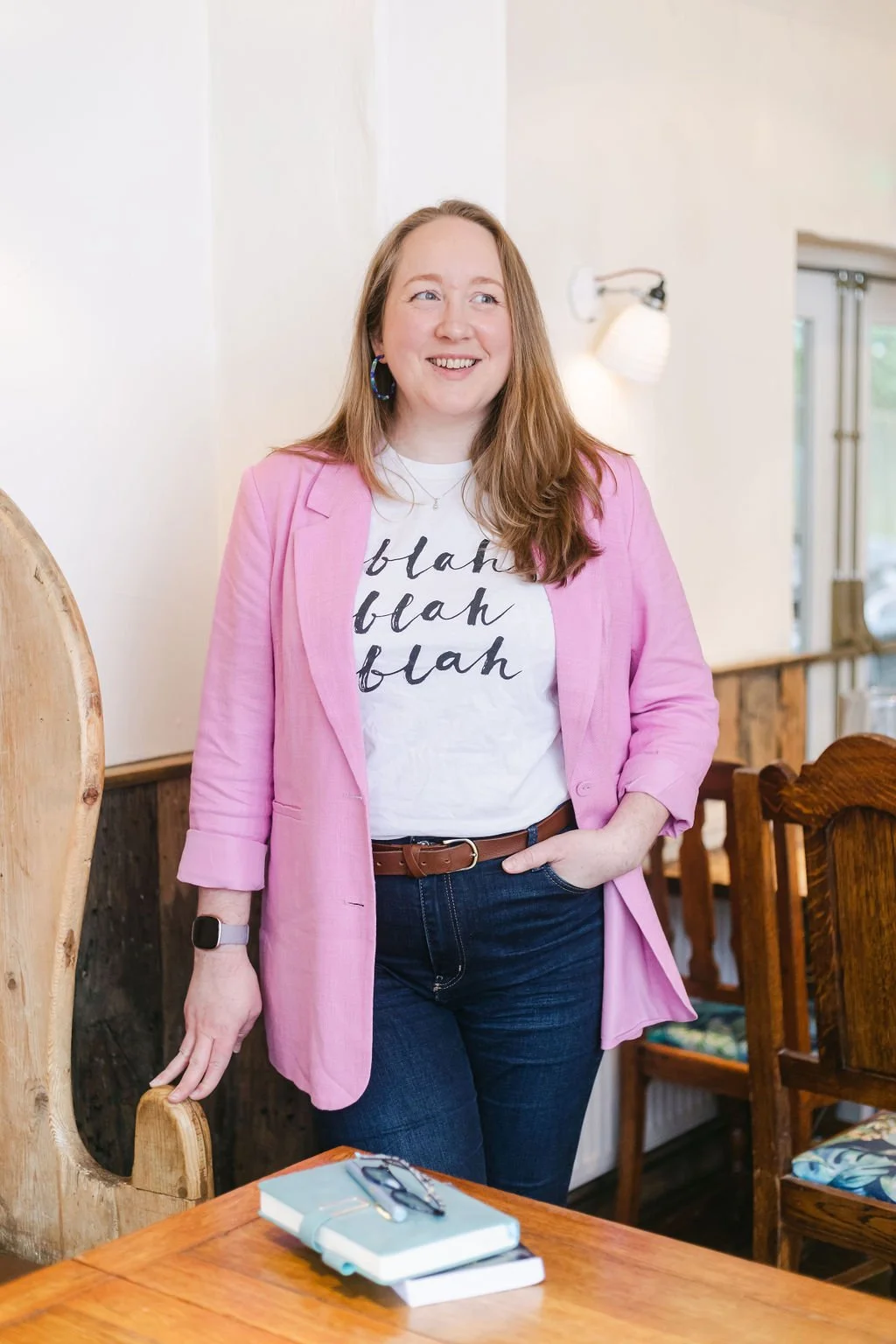
Hi, I’m Peta! Pre-pandemic, I spent fifteen years in youth clubs, school corridors, and the occasional skate park - building trust with people who had every reason not to give it, and learning to listen for what was being said underneath the words.
You develop a particular set of skills doing that work. Genuine listening. The ability to look past the surface-level story and find the real one. An instinct for what someone actually needs, rather than what they say they need. And a reasonable tolerance for the smell of Lynx Africa at nine in the morning.
The brands I work with now are past the startup stage. They have revenue, a team, returning clients, and a founding message that no longer fits what they’ve become. What they need is someone who can see what’s changed, and what’s missing, and build from there. It turns out the skills transfer.
Fewer skate parks these days, more customer interviews. But it’s really the same job.
Free Range Marketing is strategic brand messaging for businesses in their growing-up phase - the stage between startup and established, where you’ve outgrown your original story and haven’t found your new one yet.
Everything I know, I learned at the skate park
The GUIDE framework runs through every engagement. The output changes depending on what you need, but the methodology stays the same.
Genuine Listening
G
When I was a youth worker, my job was mostly to listen - usually to what wasn’t being said. A teenager could tell me they were “fine” while simultaneously dismantling a stapler and yeeting it across the room. The real story was never in the word fine.
These days, my clients aren’t throwing stationery, but the skill is the same. When a founder talks about their business, I listen for the hesitations, the repeated phrases, the things that make their eyes light up. And when I run customer interviews or listen to sales call recordings, I’m listening for common themes and unexpected wins.
That’s where the most effective message lives - in the tangle underneath.
Unmasking the Stats
U
In youth work, the behaviour that looked like the problem was almost never the problem. The kid who was angry about the basketball game wasn't angry about the basketball game - no behaviour happens in a vacuum.
The same is true with how your customers behave. And the stats don’t always tell you the whole story. The click-through rate that looks healthy while conversions flatline. The customer data that only confirms your assumptions because you didn’t ask the question that would challenge them.
Unmasking the Stats means going behind the numbers to find out what they're actually telling you - and what they're not.
Inclusive Empathy
I
Empathy and ROI are not in competition. Two founders once told me they were "very numbers guys, but we know we need more." They understood they had to find their way into their customer's emotional world precisely because they couldn't access it from inside their own. That’s a conversion strategy.
While manipulative marketing uses the shape of people's feelings to get what it wants. Empathetic marketing actually understands what they feel and speaks to it honestly. People can tell the difference - they've developed a finely tuned detector for being sold at, and they use it constantly. The brands that make them feel seen are the ones they come back to and tell their friends about. Even when what they're buying is a picture frame.
Delivering Stories
D
Human beings have been sharing stories since before we had paper to write them on - around campfires, across trade routes, through songs and myths that lasted centuries because they made someone feel something they recognised. The medium has changed, but the instinct remains.
The content that gets shared is the content that makes someone feel seen - that articulates something they'd been feeling without quite having the words for it.
People don't connect with your techy jargon, but they also don’t want to be talked down to. Stories make things real. (And these stories are all waiting for me to find in your customer research.
Eradicating Taboos
E
There’s a rule when you work with teenagers: if they’re brave enough to ask the question, you answer it. No flinching, no euphemisms, no shuffling your shoes and pretending someone’s calling you.
Every industry has the version of the question nobody wants to answer - the thing everyone’s thinking and nobody’s saying. Find the nerve to name it, and your audience exhales, they feel seen, and they trust you. Here’s where we find the honest thing your competitors are avoiding, so you can have the conversation your audience has been waiting for.
Think your brand might be hitting its teenage years?
Let’s have a strategic, two-way conversation to work out whether the situation you’re in is one I can help with, and whether working together makes sense for both of us.
Book directly below, or send a message first if you’d rather write it out.
Or get in touch